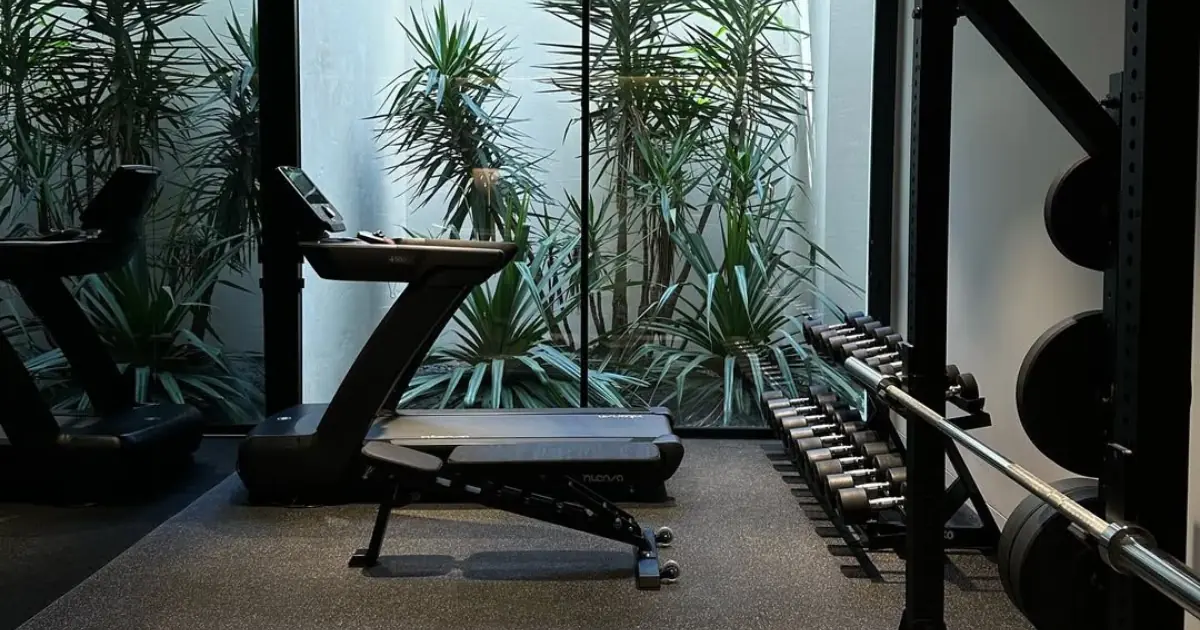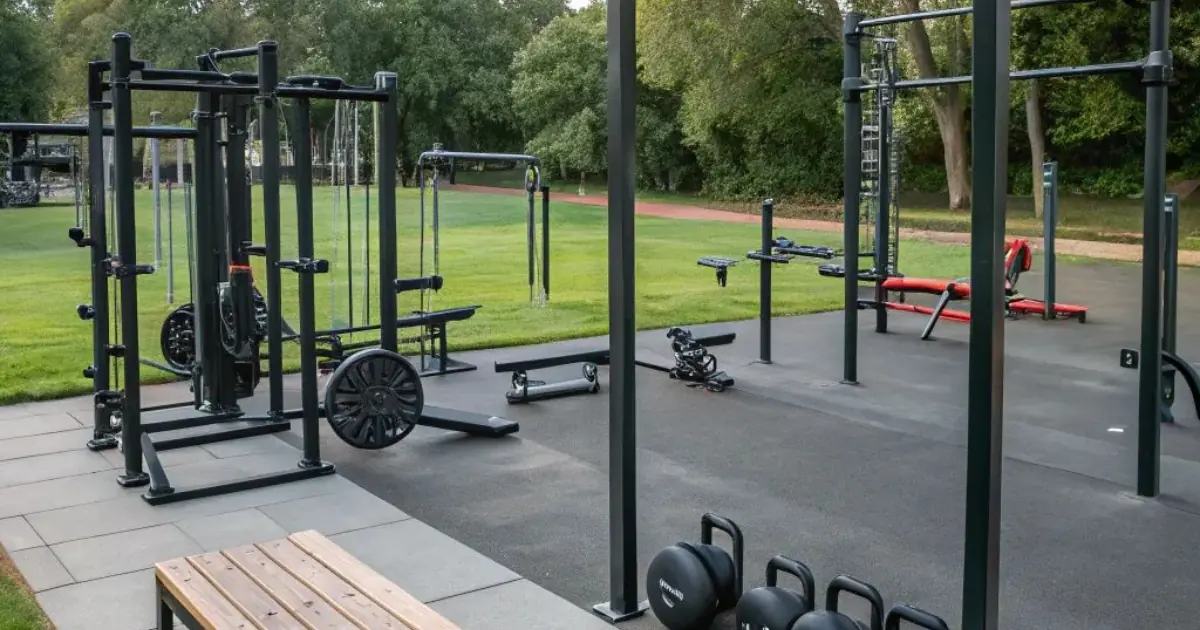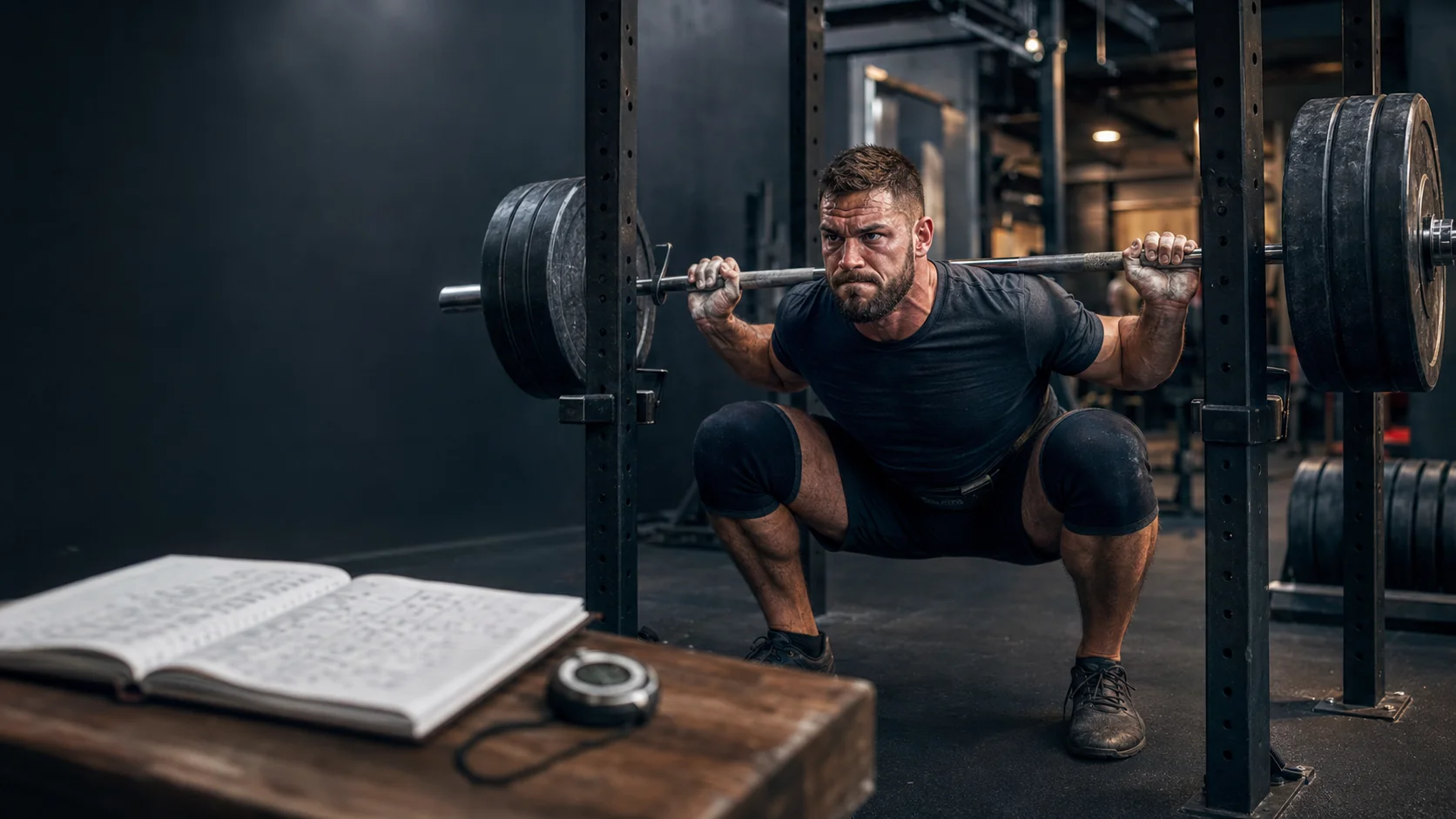
Gym debates love a winner. Barbells are called “functional,” machines are dismissed as shortcuts, and lifters are urged to pick a side. Yet muscles respond to tension, effort, range of motion, volume, and progressive overload—not equipment identity.
Equipment changes how the stimulus is delivered. A dumbbell press requires control of independent loads; a chest press provides a guided path. Both train the chest, but their skill and fatigue costs differ.
The useful question is therefore not “Are free weights or machines better?” It is “Which option best solves today’s training problem?” This guide compares free weights vs machines for strength, muscle growth, safety, and general fitness, then shows how to combine them in a realistic program.
This is general education, not medical or rehabilitation advice. Pain, injury, neurological symptoms, or post-operative training requires qualified guidance.
First, Define the Equipment
Free weights are external loads you control through space. Barbells, dumbbells, kettlebells, medicine balls, and weighted carries fit this category. Benches and racks may support the exercise, but the path is not fully dictated by a machine.
Resistance machines use a frame, track, lever, cable, or cam to redirect force. Some fix the path; cable and plate-loaded stations permit more freedom. A Smith-machine squat and seated leg curl therefore create different demands.
Bodyweight movements, bands, and suspension trainers sit outside this division. The exercise’s constraints matter more than its label.
| Feature | Free weights | Resistance machines |
|---|---|---|
| Movement path | Controlled primarily by the lifter | Partly or mostly guided |
| Stability demand | Usually higher | Usually lower |
| Learning curve | Often longer for compound lifts | Often shorter |
| Target-muscle focus | Can be limited by balance or technique | Often easier to isolate |
| Loading options | Plates, dumbbell jumps, leverage | Weight stack, plates, machine settings |
| Setup consistency | Depends on skill and positioning | Easier to reproduce once adjusted |
Muscle Growth: Both Can Work Extremely Well
For hypertrophy, the target muscle needs challenging repetitions through an appropriate range, followed by enough recovery to adapt. Neither barbells nor machines own that process.
Free weights create high tension through compound movements. Machines can do the same while reducing balance demands. With comparable effort and programming, both can support substantial muscle growth.
The choice often depends on the limiting factor. In a barbell squat, balance, trunk fatigue, confidence, or lower-back endurance may end the set. A hack squat provides stability that can let the legs work closer to failure. It simply allocates fatigue differently.
Machines can be valuable later in a workout. After Romanian deadlifts, a seated leg curl trains hamstrings without taxing grip and spinal erectors again. A split squat, however, develops single-leg control that a leg extension does not.
For muscle gain, evaluate each exercise by asking:
- Does the target muscle receive meaningful tension?
- Can you use a repeatable, tolerable range of motion?
- Can you progressively add reps, load, or quality?
- Does another factor end the set too early?
- Is the recovery cost appropriate for the benefit?
Training Volume for Muscle Growth
Strength Is Specific to the Skill You Practice
Strength is partly movement-specific. To improve a barbell squat, practice that squat. Leg presses strengthen the quadriceps but do not teach bar balance or competition technique.
Testing machine strength tends to favor machine-trained people; testing a free-weight lift favors those who practiced it. Either can improve general strength, while the largest gains appear in the trained task.
Free weights are particularly useful when the outcome includes:
- Powerlifting or Olympic lifting performance
- Coordinating force across several joints
- Controlling an external load without a fixed path
- Building confidence in common barbell or dumbbell movements
Machines can then strengthen supporting muscles with less technical demand.
Stability: Benefit, Cost, or Both?
Free weights demand more stabilization because the lifter controls the path. This can improve coordination or become a bottleneck.
A standing one-arm press uses the shoulder, trunk, hips, and feet. That suits a whole-body goal. To train the deltoid near failure, a supported machine press may be more efficient.
More instability is not automatically more functional. Standing on an unstable surface while lifting a light weight may reduce the force the target muscle can produce without closely matching a real-world task. Stability should be dosed according to the desired adaptation, not treated as a moral virtue.
Are Machines Safer Than Free Weights?
No equipment is injury-proof. Safety depends on the person, setup, load, fatigue, supervision, and environment.
Machines reduce balance demands and can be easier to stop. However, an unsuitable fixed path or incorrect seat position can feel uncomfortable.
Free weights allow a natural path but require control. Some lifts need safeties or a spotter near failure; a barbell bench press presents different risks from a goblet squat.
Use this basic safety checklist for either category:
- Learn the setup and stopping procedure.
- Begin with a manageable load and controlled range.
- Use collars, safeties, or a spotter where appropriate.
- Stop if sharp or worsening pain changes the movement.
- Progress only while technique remains repeatable.
Rehabilitation is not synonymous with machines. Exercise must reflect diagnosis, recovery stage, and professional guidance.
Which Is Better for Beginners?
Beginners can use both. Machines provide a quick route to challenging the muscles while the user learns gym etiquette, effort, and basic programming. Free weights develop movement skill and offer exercises that can be performed in many facilities or at home.
A beginner might learn goblet squats, dumbbell presses, and Romanian deadlifts while using leg presses, pull-downs, and seated rows for extra volume.
The best starting exercise is one the person can understand, perform without pain, and progress confidently. Some beginners feel secure inside a machine; others find a fixed path awkward. Coaching quality and equipment fit matter more than ideology.
Compare Common Exercise Choices by Goal
| Training goal | Free-weight option | Machine option | Practical decision |
|---|---|---|---|
| Maximum pressing strength | Barbell bench press | Chest press | Practice the barbell; use the machine for extra volume |
| Quadriceps hypertrophy | Front squat or split squat | Hack squat or leg extension | Choose the option that lets quads limit the set |
| Back development | Dumbbell or barbell row | Chest-supported row | Support the torso if lower-back fatigue interferes |
| Hamstring growth | Romanian deadlift | Seated leg curl | Combine hip extension and knee flexion |
| Shoulder isolation | Dumbbell lateral raise | Cable or machine lateral raise | Use the most stable, comfortable tension profile |
| General fitness | Goblet squat, carries, presses | Leg press, row, press | Build a balanced menu around confidence and access |
A Romanian deadlift and leg curl both train hamstrings but at different joints. Selecting both can be better than forcing one exercise to do every job.
Resistance Profiles Can Change the Experience
Exercises are not equally difficult throughout their range. A dumbbell lateral raise creates little shoulder torque when the arm hangs down and more near horizontal. A cable can challenge the shoulder earlier, while a machine cam can alter resistance as the lever moves.
This resistance profile affects where an exercise feels hardest and may influence comfort. It does not override the fundamentals: consistent technique, sufficient effort, progressive overload, and recovery. An advanced machine you dislike and rarely use will not outperform a simple dumbbell movement you execute well.
When comparing similar options, choose a resistance profile that challenges the target muscle without forcing you out of position. Variety can also be useful: one movement may load a muscle strongly in a lengthened position, while another creates more tension elsewhere in the range.
What About Fat Loss?
Neither equipment type has a special fat-burning effect. Fat loss primarily depends on a sustained energy deficit, while resistance training helps preserve lean tissue and performance. Choose exercises that allow productive training and recovery rather than relying on estimated workout calorie burn.
How to Combine Free Weights and Machines
A mixed plan lets each tool fill a specific role. Place technical or goal-specific exercises early, when attention and coordination are highest. Use stable machine or cable movements to add targeted work afterward.
Three-day full-body example
Monday
- Barbell or goblet squat — 3 × 5–8
- Machine chest press — 3 × 8–12
- Seated cable row — 3 × 8–12
- Seated leg curl — 3 × 10–15
- Dumbbell lateral raise — 2 × 12–15
Wednesday
- Dumbbell bench press — 3 × 6–10
- Romanian deadlift — 3 × 6–10
- Lat pull-down — 3 × 8–12
- Leg extension — 2 × 10–15
- Cable curl — 2 × 10–15
Friday
- Hack squat or leg press — 3 × 8–12
- One-arm dumbbell row — 3 × 8–12 per side
- Machine shoulder press — 3 × 8–12
- Hip thrust — 3 × 8–12
- Cable triceps press-down — 2 × 10–15
This is a template, not a prescription. Beginners can use two sets per exercise; advanced lifters can adjust priority volume.
Progressive Overload—A Practical Guide
How to Decide Exercise by Exercise
Use this five-step filter instead of selecting one equipment camp:
1. Name the adaptation
Are you practicing a specific lift, targeting a muscle, building balance, or minimizing fatigue? One exercise cannot maximize every outcome.
2. Identify the limiting factor
If grip, balance, cardiovascular fatigue, or discomfort ends the set before the target muscle, another setup may work better.
3. Check fit and comfort
Adjust the seat, handles, stance, and range. A famous exercise is not mandatory if the equipment dimensions or movement path do not suit you.
4. Compare the recovery cost
A barbell row and chest-supported machine row can train similar musculature, but the former asks more from the lower back. Select the fatigue profile that fits the rest of the week.
5. Confirm that progression is measurable
You should be able to track load, repetitions, range, or execution. Machines with inconsistent labels still work—record the exact machine and settings.
Common Myths That Distort the Debate
“Machines do not build real strength”
Machines build strength in the movement and muscles trained. Transfer to a different task is not perfect, but the same specificity applies to free-weight exercises.
“Free weights are always more functional”
Function is goal-specific. A dumbbell lift may demand more coordination; a machine may build the leg strength someone needs to climb stairs. The outcome determines relevance.
“Serious lifters should graduate from machines”
Advanced athletes regularly use machines to target muscles, manage fatigue, and work around equipment or joint constraints. Exercise selection should become more purposeful with experience, not more dogmatic.
Frequently Asked Questions
Can you build muscle using only machines?
Yes. Machines can provide progressive tension and challenging sets for all major muscle groups. A mixed approach may offer more variety and movement skill, but it is not required for hypertrophy.
Do free weights activate more muscles?
They often demand more stabilization, but greater activity somewhere does not prove better growth in the target muscle. Activation studies also do not directly measure long-term hypertrophy.
Are machines better for training to failure?
They often make failure easier to manage because the path is stable and the load can be stopped safely. Exercise design and setup still matter, and failure is not required on every set.
Are dumbbells better than barbells?
Neither is universally better. Dumbbells allow independent arm movement and flexible paths; barbells make small total-load increases easier and provide stability between the hands.
Should older adults use machines or free weights?
Either can be appropriate. Experience, balance, bone health, joint comfort, supervision, and goals should guide selection—not age alone.
Can machines improve athletic performance?
Yes, by strengthening muscles that contribute to sport. Athletes also need specific practice, speed, coordination, and movement exposure because machine strength does not automatically transfer to every sporting task.
Stop Choosing Sides and Start Solving Problems
The free weights vs machines debate survives because simple rules are appealing. Effective programming is more nuanced: free weights often excel at movement skill and specific strength, while machines offer stability, target-muscle focus, and efficient fatigue management.
Use the tool that matches the task. Practice the lift you want to improve. Stabilize an exercise when balance prevents the target muscle from working hard. Combine compound and isolation movements when they provide complementary adaptations. Above all, apply progressive overload with technique you can reproduce.
The best gym is not the one with the most sophisticated machines or the largest free-weight area. It is the one where you can train consistently, measure progress, and select exercises that fit your body and goals.