Most people do not abandon training because they stop caring. Consistency usually breaks through smaller events: a busy week, an uncertain workout, a disappointing session, or the belief that progress stopped.
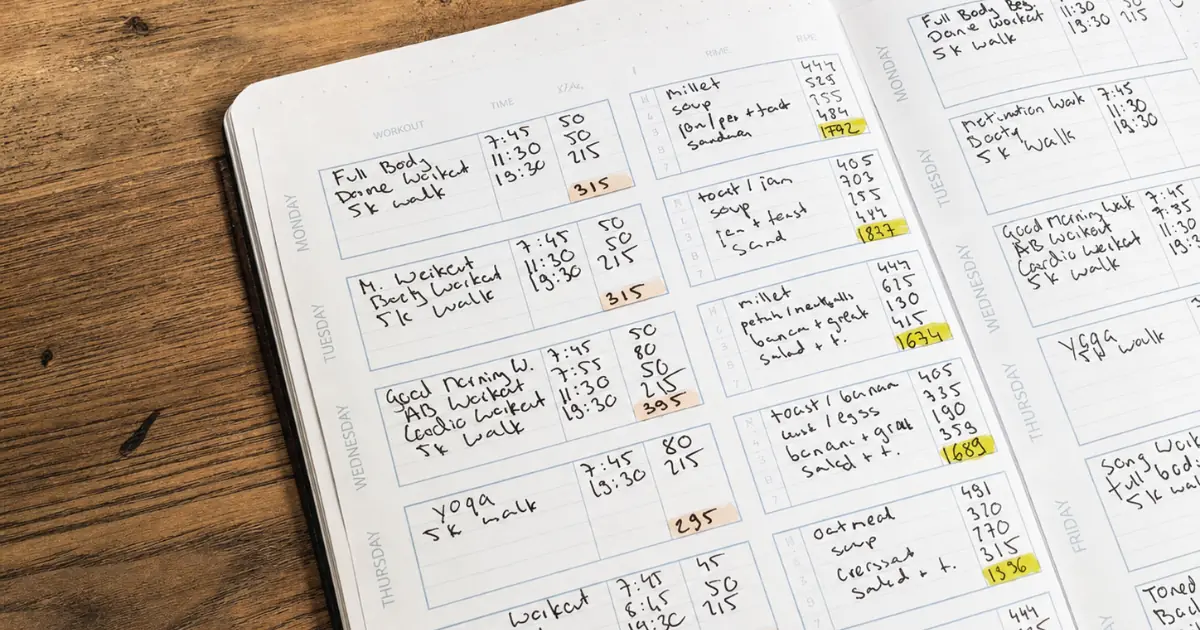
A workout log cannot remove deadlines or create motivation. It can reduce uncertainty: open the previous session, compare reps and weight, and continue from the last recorded step after an interruption.
That is how workout tracking improves consistency: it turns exercise from a sequence of isolated decisions into a visible process. The log provides direction before training, feedback during the session, and evidence afterward.
Tracking is not automatically useful. Recording everything becomes tedious, while data without review creates administration rather than insight. This guide explains what to record and how to keep the habit sustainable.
Consistency Is a System, Not a Personality Trait
Consistent athletes are often called naturally disciplined, overlooking their systems: a schedule, prepared equipment, a known program, and a record of what comes next.
Every unresolved question increases friction:
- Which exercises should I perform?
- What weight did I use last time?
- How many sets remain?
- Should I add weight today?
- Is this program working?
A log answers those questions before they require willpower. It makes the next action clear.
Consistency is not perfection. Completing 40 of 52 planned weeks is still consistent; a useful system makes returning easy.
The Feedback Loop Created by a Workout Log
Training works through repeated stimulus, recovery, and adaptation. Without a record, sessions feel disconnected.
Workout tracking creates a simple feedback loop:
- Plan: Select the exercises, sets, repetitions, and intended effort.
- Perform: Complete the session and record what actually happened.
- Compare: Review the result against previous performances.
- Adjust: Repeat, progress, or reduce the demand based on evidence.
- Return: Begin the next workout with a defined starting point.
Finishing one log prepares the next session and reduces the effort required to begin.
| Without tracking | With a workout log |
|---|---|
| Choose exercises again | Open a saved routine |
| Guess the previous load | View the last performance |
| Rely on how progress feels | Compare reps and weight |
| React strongly to one bad day | Review a longer trend |
| Restart after interruptions | Resume from the last session |
1. Tracking Reduces Decision Fatigue
After a demanding day, designing a workout in the locker room feels harder than following one. A saved plan reduces this decision burden.
A saved routine turns a vague intention—“I should train”—into a sequence:
- Goblet squat: 3 × 8–12
- Dumbbell bench press: 3 × 8–12
- Seated row: 3 × 10–12
- Romanian deadlift: 2 × 8–10
- Lateral raise: 2 × 12–15
The lifter still responds to readiness, but the architecture is settled. Attention remains for technique and effort.
This is why a repeatable plan often outperforms a sophisticated routine that changes daily. Predictability makes starting easier.
How to Create a Workout Plan That Produces Progress
2. Visible Progress Makes Repetition Meaningful
Physical changes are slow and hard to notice. A mirror reflects lighting and posture, while one-repetition strength gains easily disappear from memory.
A log preserves small wins:
- 50 kg × 8 becomes 50 kg × 10
- Three assisted pull-ups become five
- A workout requiring 70 minutes becomes 58 without lower performance
- Two weekly sessions become three months of regular training
Together, these small changes show adaptation and reinforce consistency before appearance noticeably changes.
If performance remains flat, the log prompts a review of technique, effort, volume, nutrition, or recovery.
3. A Log Converts Goals Into Actions
“Build muscle” and “get stronger” describe desired outcomes, not today’s behavior. Tracking connects them to controllable actions.
| Long-term goal | Weekly behavior | Session metric |
|---|---|---|
| Build muscle | Complete planned weekly volume | Sets, reps, RIR |
| Get stronger | Practice priority lifts consistently | Load and technique |
| Improve endurance | Accumulate appropriate aerobic work | Duration, distance, effort |
| Return after a break | Rebuild training frequency gradually | Sessions completed |
| Maintain fitness | Meet a minimum weekly dose | Workouts and key loads |
Outcomes take months; process metrics provide weekly feedback. You cannot command muscle growth, but you can complete planned training.
Track controllable behavior while recognizing that illness, travel, equipment, and stress affect performance.
4. Recording Workouts Supports Progressive Overload
Progressive overload requires comparison. To know whether the demand increased, you need a baseline.
Suppose a chest press uses a target of three sets of 8–12 repetitions. The log shows:
| Week | Load | Repetitions | Decision |
|---|---|---|---|
| 1 | 40 kg | 10, 9, 8 | Keep load |
| 2 | 40 kg | 10, 10, 9 | Keep load |
| 3 | 40 kg | 11, 10, 10 | Keep load |
| 4 | 40 kg | 12, 12, 12 | Increase next time |
| 5 | 45 kg | 9, 8, 8 | Build repetitions |
The record removes guesswork. Performance—not impatience—determines the next action.
Holding steady after poor sleep is not failure when the longer trend remains positive.
When Should You Increase Weight?
5. Attendance Data Creates Honest Accountability
Memory compresses time. “I train four times weekly” may mean four in a good week and one or two in others. History shows the pattern without judgment.
Useful accountability asks:
- How many sessions were planned?
- How many were completed?
- Which day is missed most often?
- Are workouts too long for the available window?
- Does consistency fall after specific sessions?
The objective is redesign, not guilt. If Friday is repeatedly missed, move or shorten it. If a five-day plan averages three sessions, build a three-day plan.
Adherence data turns “I need more discipline” into a practical scheduling problem.
6. Tracking Makes Returning Easier
An all-or-nothing mindset treats a missed week as the end. History provides a last session and a clear place to resume.
After a short interruption, repeat previous loads with fewer sets or more RIR. After a longer break, reduce load and volume, then rebuild.
Returning means continuing a documented process, not inventing a new identity. Avoid using streaks alone: monthly completion and speed of return are more resilient measures.
How Many Sets per Muscle per Week?
What Should You Track?
The best log guides the next decision but remains simple enough to complete.
Essential fields
- Exercise and variation
- Working weight
- Repetitions for every set
- Number of working sets
- Date of the session
These fields show whether performance improved under comparable conditions.
Useful optional fields
- Repetitions in reserve (RIR) or RPE
- Rest time
- Machine seat or handle setting
- Range-of-motion or tempo note
- Pain or readiness note
- Session duration
Use optional data only when it changes decisions. If tempo is consistent, it may not need a field.
| Metric | Record regularly? | Why it matters |
|---|---|---|
| Exercise, load, reps, sets | Yes | Core performance history |
| RIR or RPE | Usually | Distinguishes easier and harder performances |
| Rest time | When relevant | Makes comparisons more consistent |
| Body weight | Goal-dependent | Adds context for gaining, cutting, and bodyweight lifts |
| Soreness | Occasionally | Useful only as one recovery signal |
| Calories burned | Rarely for lifting decisions | Consumer estimates may not guide progression well |
| Mood and motivation | Briefly if useful | Can reveal patterns without becoming a diary |
How to Track Without Making Training Tedious
Overtracking makes workouts feel administrative. Keep the habit lightweight.
Start with four numbers
Record exercise, weight, repetitions, and sets. Add RIR when you can estimate effort consistently.
Log during the rest period
Record immediately during rest: perform, save, rest, repeat.
Prebuild recurring routines
A saved template eliminates repeated entry. Edit only what changed.
Keep notes short
“Seat 4,” “pause each rep,” or “left knee discomfort” is more useful than a long paragraph you will never review.
Review on a schedule
Use a brief weekly review and a deeper four-to-eight-week assessment.
Paper, Spreadsheet, or Workout-Tracking App?
The best medium is the one you will use consistently.
| Method | Strengths | Limitations |
|---|---|---|
| Paper notebook | Fast, flexible, distraction-free | Manual calculations and limited search |
| Spreadsheet | Custom formulas and broad overview | Awkward during sessions on a phone |
| Workout-tracking app | Saved routines, timers, history, charts | Can become cluttered if poorly designed |
Paper suits stable programs; spreadsheets enable custom analysis. Apps can retrieve previous performances, calculate volume, time rests, and display trends.
The tool should reduce friction. Exportable data and clear history matter more than decorative metrics.
A Five-Minute Weekly Review
At the end of the training week, answer five questions:
- How many planned sessions did I complete?
- Which exercises improved in load, reps, or execution?
- Where did performance decline?
- Did soreness or fatigue interfere with another session?
- What single adjustment, if any, should I make next week?
Most weeks need no change. If training progresses sustainably, repeat it. Continuation should be the default.
Monthly, compare completion, priority-lift trends, and weekly volume.
Common Tracking Mistakes
- No progression rule: Define when to add reps, weight, or reduce demand.
- Chasing records daily: Stable numbers can be appropriate during fatigue or stress.
- Changing technique: Shorter range or momentum creates a false record.
- Recording too much: Keep only information that supports decisions.
- Punishing missed sessions: Identify the scheduling problem and resume.
A 30-Day Workout-Tracking Experiment
If logging feels like another commitment, test a minimal system for one month rather than promising to track forever.
Week 1: Establish the habit
Save two or three recurring workouts. Record only exercise, weight, sets, and repetitions. Your goal is complete entries, not detailed analysis.
Week 2: Use the previous performance
Before each exercise, review its last entry. Decide whether to repeat the result or attempt one additional repetition while preserving technique.
Week 3: Add effort context
Record a simple RIR estimate for working sets. This distinguishes a comfortable 10-rep performance from a maximal 10 and improves future load decisions.
Week 4: Review the pattern
Compare completed sessions, priority exercises, and missed days. Keep the system if it makes the next workout clearer. Remove any field you did not use, and change a recurring session time if the attendance history exposes a scheduling problem.
At the end of 30 days, success does not require a personal record. The experiment works if you can answer three questions quickly: What did I do last time? What should I attempt today? Did I follow the planned schedule? Those answers are the practical foundation of consistent training.
Frequently Asked Questions
Does tracking workouts really improve consistency?
It can support consistency by reducing decisions, preserving the next action, and making progress visible. It cannot compensate for an unrealistic schedule or poorly designed program.
Do I need to track every workout?
Regular tracking creates the clearest history, but missing one entry does not invalidate the system. Resume at the next session rather than abandoning the habit.
What is the most important information to record?
Record the exercise, working weight, repetitions, and sets. These fields provide the minimum useful performance history.
Should beginners track RIR or RPE?
Beginners can record an estimate, but accuracy takes practice. Technique and basic sets, reps, and load should remain the first priorities.
How often should I review my workout log?
Use the previous entry during every session, perform a short weekly review, and assess broader trends every four to eight weeks.
Can tracking become unhealthy or obsessive?
Yes, if numbers create anxiety, encourage training through pain, or dominate self-worth. Reduce metrics, take a flexible approach, and seek qualified support if tracking causes distress.
Make the Next Workout Easier to Start
The greatest benefit of workout tracking is not a sophisticated chart. It is continuity. The log tells you what you did, what comes next, and whether repeated effort is moving you toward the goal.
Keep the system simple: save the routine, record working sets, compare performance fairly, and review trends on a schedule. Use missed sessions and stalled lifts as information rather than verdicts.
Consistency does not require perfect motivation or an unbroken streak. It requires a reliable next step. A well-kept workout log makes that step visible every time you return.