On your first day at the gym, do not test your limits or use every machine. Learn the space, complete five movement patterns, record starting weights, and leave ready to return. A good first session takes 45–60 minutes, stays short of failure, and creates a baseline.
This guide covers what to bring, where to start, which exercises to perform, and how to choose weight. No previous experience is required.
Your First-Gym-Day Checklist
Bring only what makes the session easier:
- comfortable training clothes;
- clean athletic shoes appropriate to the gym’s rules;
- water bottle;
- phone or notebook for the workout;
- headphones, if you want them;
- small towel if the facility requires one;
- lock if the changing-room lockers need it;
- any medication or medical equipment you normally require.
Confirm opening hours, access, locker policy, and whether orientation is available. Many gyms show new members how to adjust machines. Asking staff is faster than guessing.
Your first workout does not require a collection of belts, straps, supplements, or accessories.
What to Do When You Enter the Gym
The unfamiliar layout can feel more difficult than the exercises. Use this sequence:
- Check in and find the changing room.
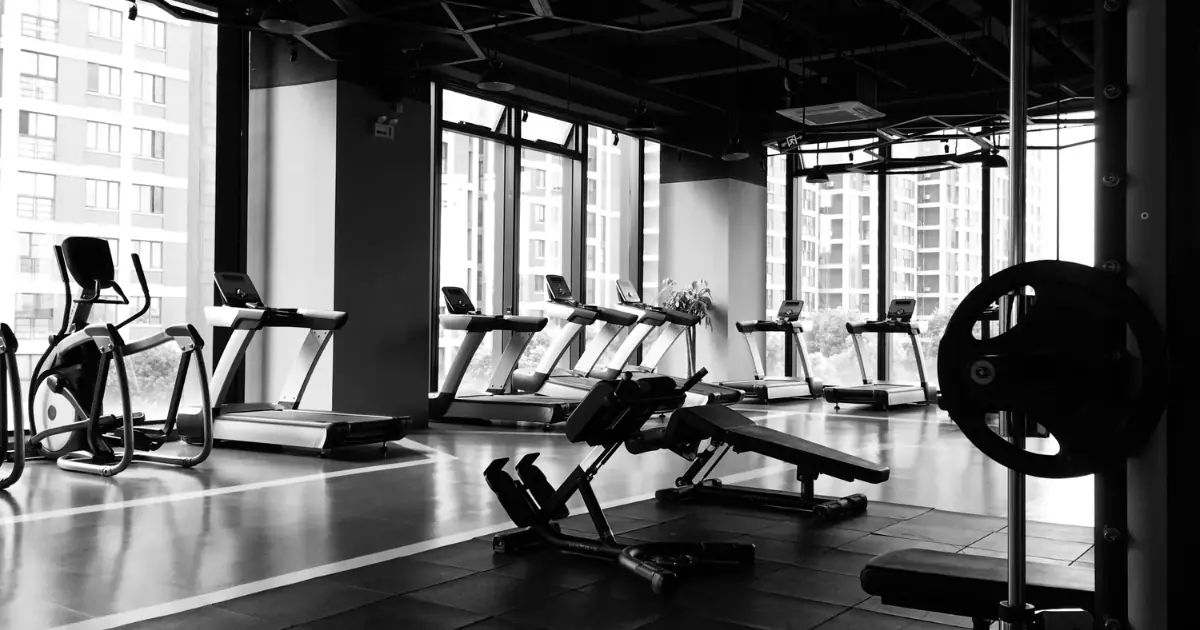
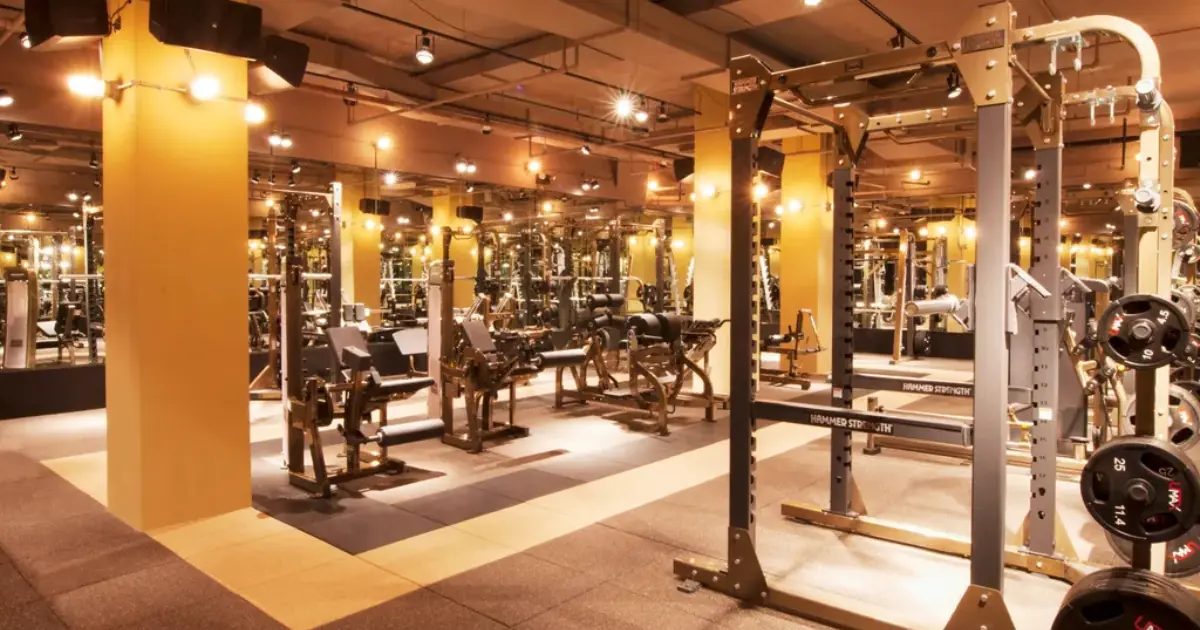
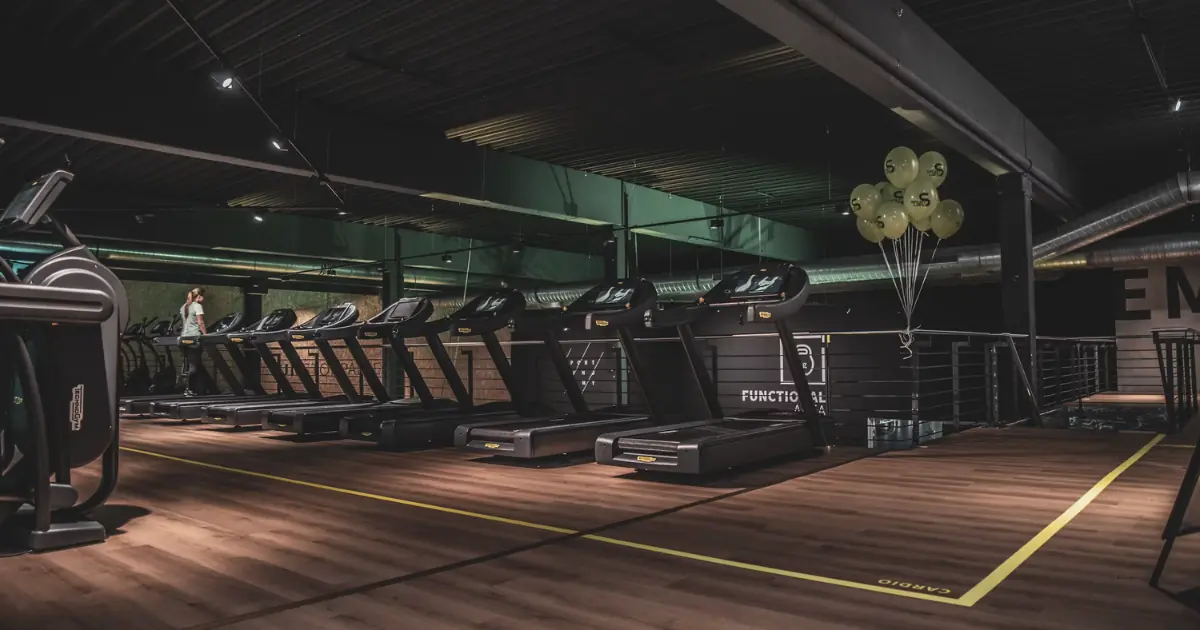
- Locate the cardio area, resistance machines, free weights, and water station.
- Ask where adjustable benches and machine instructions are located.
- Walk for five minutes while observing the layout.
- Open your workout plan before starting the first exercise.
Avoid wandering between whatever is empty. A written list reduces decisions and gives the session a clear end.
Most people are focused on themselves. You need not recognize every machine or look experienced—only follow the plan and use equipment respectfully.
The First Day at Gym Workout
This full-body session introduces a squat pattern, horizontal push, horizontal pull, hip-dominant movement, and vertical pull. Machines are used where their stability makes setup easier, but substitutions are included.
Warm-up
- Walk, cycle, or use an elliptical for 5 minutes at a comfortable pace.
- Perform one light practice set before each new resistance exercise.
- Increase the practice weight gradually if the first set feels extremely easy.
Cardio raises body temperature; the practice set prepares the exact movement. Warm up without creating fatigue.
Beginner workout
| Order | Exercise | Sets | Reps | Beginner target |
|---|---|---|---|---|
| 1 | Goblet squat or leg press | 2 | 8–10 | Controlled range and stable feet |
| 2 | Machine chest press | 2 | 8–10 | Shoulder blades stable; no bouncing |
| 3 | Seated cable or machine row | 2 | 8–10 | Controlled torso and full comfortable pull |
| 4 | Dumbbell Romanian deadlift | 2 | 8–10 | Hips move back; weights stay close |
| 5 | Lat pulldown | 2 | 8–10 | Pull without excessive backward lean |
| 6, optional | Plank | 2 | 15–30 sec | Breathe while maintaining position |
Rest roughly 90–150 seconds, taking longer when needed to repeat good technique.
If equipment is busy, use the substitutions below instead of waiting indefinitely.
| Planned exercise | Simple alternative |
|---|---|
| Goblet squat | Leg press or box squat |
| Machine chest press | Incline push-up or light dumbbell press |
| Seated row | Chest-supported dumbbell row |
| Dumbbell Romanian deadlift | Cable pull-through or hip bridge |
| Lat pulldown | Assisted pull-up machine |
Both tools are legitimate. Choose what you can set up, understand, and repeat. The free weights vs. machines guide explains their tradeoffs.
How to Choose Your Starting Weight
Start lighter than expected. The first set is an assessment, not a performance.
Use this process:
- Select a light load that appears manageable for ten repetitions.
- Perform eight slow, controlled reps.
- Ask how many additional good reps you could have completed.
- Adjust only when the answer is obvious.
| How the set felt | What to do |
|---|---|
| You could perform 6+ more good reps | Add a small amount of weight |
| You could perform about 3–5 more | Keep it; this is appropriate for day one |
| You could perform only 1–2 more | Reduce slightly or keep the next set conservative |
| Technique broke or reps were incomplete | Stop and lower the load |
Leave several reps in reserve while learning. Starting light costs little; starting heavy can hide technique problems and increase intimidation.
Effort ratings become more useful with practice. The guide to RPE vs. RIR explains how “reps left” can be recorded in later workouts.
How to Learn an Exercise Without Overthinking It
Choose one or two cues per exercise. Ten simultaneous instructions make learning harder.
For example:
- Goblet squat: “feet stable” and “sit between the hips.”
- Chest press: “shoulders stay supported” and “control the return.”
- Row: “torso stays still” and “pull elbows back.”
- Romanian deadlift: “hips move back” and “weights stay close.”
- Pulldown: “chest tall” and “elbows move down.”
Machine diagrams help with setup but cannot account for every body. Adjust the seat sensibly and ask staff when needed.
Where policy permits, a short video can help review technique without filming others or blocking space. Qualified trainers can provide individualized coaching.
What Not to Do on Your First Day
Do not test your one-rep max
Technique and familiarity are developing, so a maximum test provides little useful information.
Do not copy the hardest person in the room
Their experience, goals, and program differ. Copying visible weight without context is not a shortcut.
Do not add five extra exercises
Feeling energetic does not mean the workout is incomplete. Establish a repeatable baseline.
Do not treat soreness as the score
New exercise can cause soreness with modest work. Severe soreness is not proof of quality and may discourage the next visit.
Do not change the plan after every awkward rep
New movements feel unfamiliar. Use manageable loads and allow practice. Stop for sharp or concerning pain rather than ordinary effort.
If the Gym Feels Overwhelming
Reduce the number of unknowns. Visit during a quieter period, ask for a brief orientation, and save the exercise list on your phone before arriving. You can also complete only the first four movements and leave; a shorter planned session still counts.
Do not measure success by how confidently you move through the building. Confidence usually follows repeated exposure. For day one, checking in, completing the plan safely, and recording a baseline are enough.
Basic Gym Etiquette You Actually Need
Gym etiquette is mostly shared-space common sense:
- Return dumbbells, plates, and attachments after use.
- Wipe equipment according to facility rules.
- Do not rest directly in front of the dumbbell rack.
- Ask “How many sets do you have left?” before assuming equipment is free.
- Offer to alternate sets only when both people are comfortable doing so.
- Keep bags and bottles out of walkways.
- Avoid occupying multiple stations during busy periods.
- Respect personal space and do not give unsolicited coaching.
“Working in” means alternating sets on equipment. Agree when setup is simple or politely decline when impractical.
How Long Should Your First Workout Take?
The session should take 45–60 minutes, although locating equipment may extend the first visit.
Do not rush, but avoid turning six exercises into two hours of phone use and uncertainty. Use reasonable rests and finish the written plan.
What to Record During Your First Gym Session
Write down enough information to make the second visit easier:
- exact exercise name and variation;
- machine name or number when useful;
- seat and pad settings;
- weight used;
- completed repetitions;
- number of working sets;
- a simple note about effort or technique.
Example:
| Exercise | Set 1 | Set 2 | Note |
|---|---|---|---|
| Leg press | 40 kg × 10 | 40 kg × 10 | Seat position 3; several reps left |
| Chest press | 15 kg × 10 | 15 kg × 9 | Keep weight next time |
| Seated row | 20 kg × 10 | 20 kg × 10 | Control return more slowly |
With a log, the second workout begins with known machine settings and starting weights.
Follow the complete workout tracking guide for a practical logging system.
What to Do After the Workout
No complicated recovery ritual is required. Drink according to thirst, eat normally, and continue your day. Gentle movement may feel good but cannot guarantee no soreness.
Schedule the next session before leaving. Two or three weekly gym days can build an effective beginner routine.
Mild stiffness may follow unfamiliar exercise. Seek professional advice for persistent or severe pain, swelling, numbness, dizziness, or other concerning symptoms.
Your First Four Weeks
Do not redesign the workout every visit. Repeat similar movements long enough to learn them and compare performance.
| Week | Main objective |
|---|---|
| 1 | Learn the gym, setups, and exercise sequence |
| 2 | Repeat the exercises and refine technique |
| 3 | Add a repetition where sets remain comfortable |
| 4 | Review the log and progress only exercises that meet the standard |
Progress may mean more controlled reps, better range of motion, a lower effort rating, or a small weight increase. Use the guide for when to increase weight before loading every exercise automatically.
For a structured longer-term routine, continue with the beginner gym workout plan. It provides three full-body sessions and an eight-week progression roadmap.
Turning One Workout Into a Starting Gym Routine
Your first session is a baseline, not the entire program. A starting routine needs:
- reliable training days;
- repeated movement patterns;
- planned sets and rep ranges;
- a progression rule;
- substitutions for unavailable equipment;
- enough recovery to return consistently.
Do not assume you need a separate chest, back, arm, and leg day. Beginners often benefit from full-body training because each movement receives frequent practice. Your routine should match the days you can sustain, not an influencer’s calendar.
The guide to creating a workout plan explains how goals, schedule, weekly volume, and progression fit together.
Track Your First Workout in Gymtrack
Gymtrack turns today’s unfamiliar numbers into the starting point for future decisions. Record each exercise, weight, set, repetition, and useful setup note. During the next session, open the exercise history and continue from evidence rather than memory.
Over time, the same log can show personal records, estimated 1RM trends, weekly volume, and whether the same workload is becoming easier. On day one, however, its most valuable feature is simpler: it tells you exactly what you did.
Log your first gym workout in Gymtrack.
Frequently Asked Questions
What should I do on my first day at the gym?
Learn the layout, warm up briefly, complete a simple full-body workout, and record your weights and reps. Avoid testing maximum strength or performing every available exercise.
How many exercises should I do in my first workout?
Five basic resistance exercises are enough for most first sessions. An optional simple core movement can be added if time and energy remain.
How heavy should I lift on my first day?
Choose a weight that allows controlled reps with roughly three to five good repetitions still available. It should feel purposeful but clearly submaximal.
Should I use machines or free weights first?
Either can work. Machines simplify stability and setup, while free weights teach useful movement skills. Choose exercises you can perform confidently and repeat consistently.
How long should a beginner gym workout last?
Approximately 45–60 minutes is enough for the sample workout, including warm-ups. The first visit may take longer while you learn the facility.
What if I feel nervous or do not know how to use a machine?
Ask a staff member for setup help, use a simple alternative, or skip the exercise and return after learning it. You do not need to pretend that you know every piece of equipment.
The Bottom Line
Your first gym session should create confidence and useful information, not exhaustion. Bring the basics, follow a short full-body workout, choose conservative loads, and record what you perform.
Return with the same core movements, improve technique, and add reps or weight gradually. The successful first day is not the one that leaves you most sore—it is the one that makes the second day clear enough to complete.
Training note: General workout guidance cannot account for individual medical conditions, injuries, pregnancy, medications, or symptoms. Seek appropriate clearance and qualified instruction when your circumstances require it.